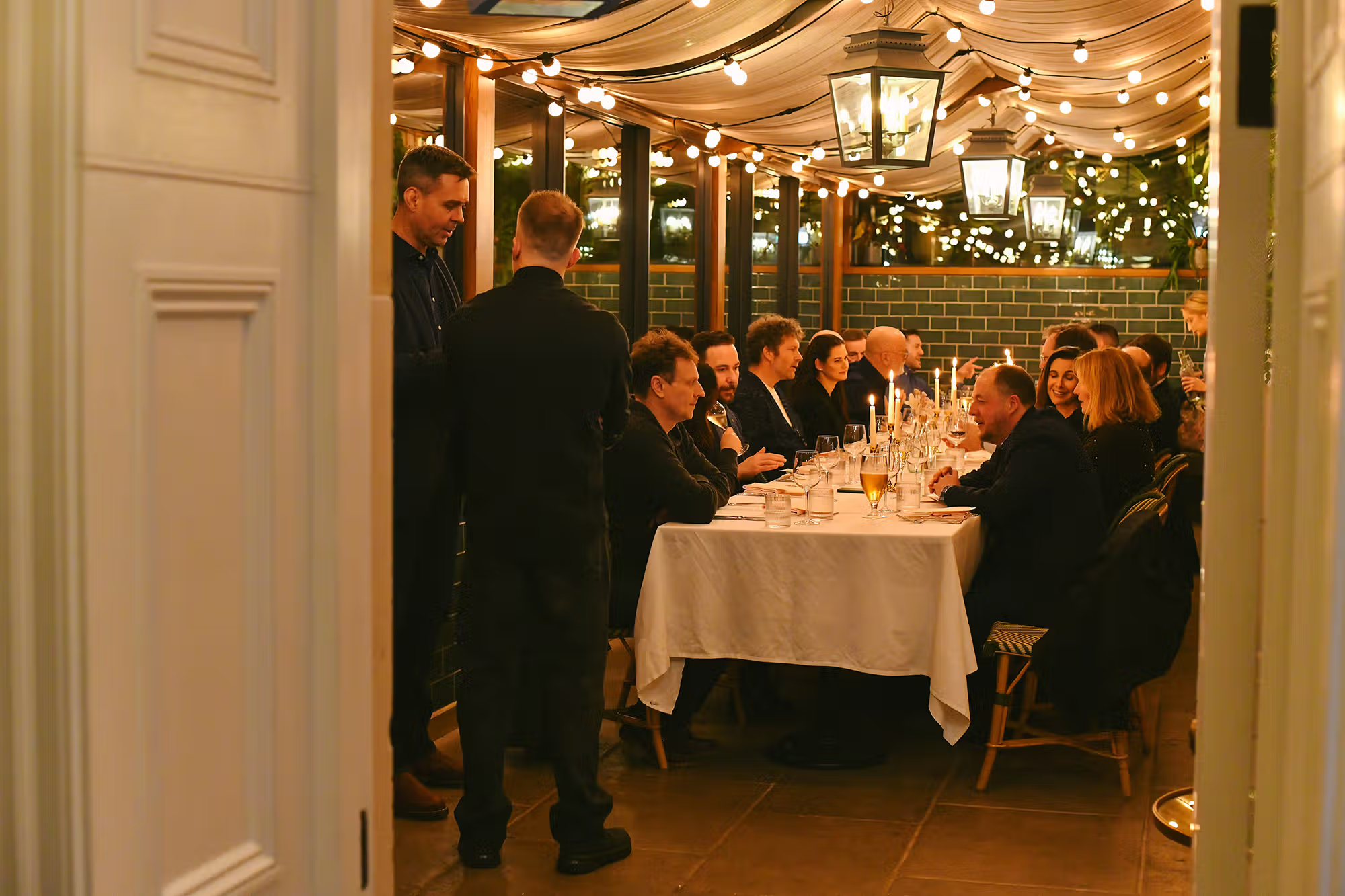
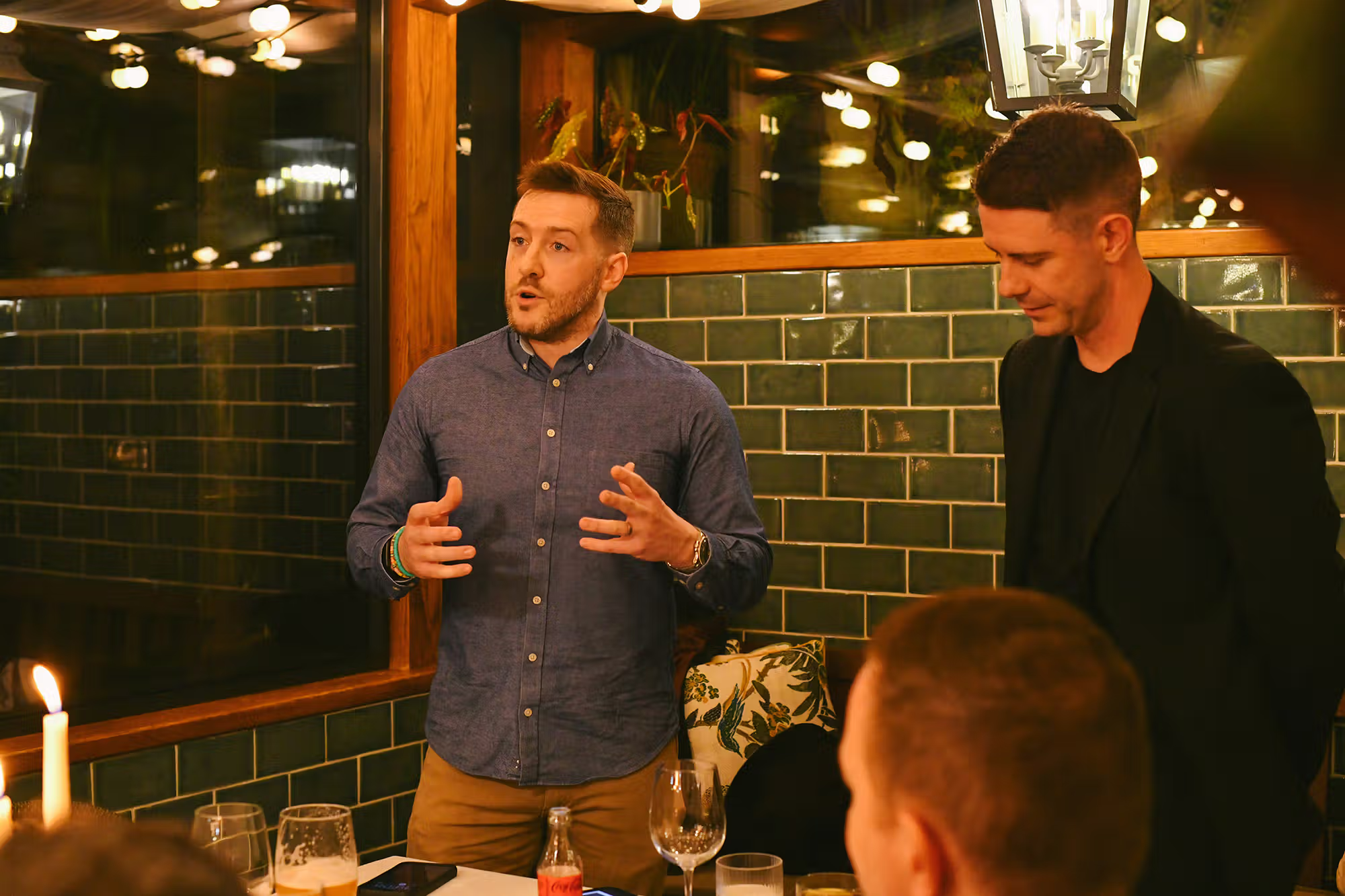
Last Thursday evening, within the warm hospitality of Gleneagles Townhouse, we gathered a group of leaders to discuss a singular, pressing question: how do we ensure Scotland does not just survive the coming technological shift, but leads it?
Co-hosted with Will Boyle of Blend and myself, the evening was anchored by the framework of the Hunter Foundation’s Entrepreneurs Manifesto. It was a night of honest dialogue and passionate discussion.

The Education of Curiosity
A recurring theme was the urgent need to prepare the next generation for a world reshaped by artificial intelligence. There is an extensive anxiety that technology is outpacing our ability to regulate or even comprehend it.
However, the consensus was not to retreat, but to rethink. In education, the focus must shift from teaching specific, soon-to-be-obsolete technologies to fostering the skill of "learning how to learn." We debated whether initiatives like Teach First or better remuneration for educators are the solution; regardless of the path, we must attract talent that can facilitate adaptability and curiosity. The goal is to produce graduates who are not just users of tools, but masters of navigation.
Peter Proud, founder and CEO of Forrit, provided a compelling example of this in practice. He shared the significant impact of bringing young people directly into the business environment, allowing them to learn and develop their skills alongside their formal education.
At Forrit they run a successful Graduate Apprenticeship Programme and skills initiative that combines paid, real‑world employment with accredited university education, creating a direct pathway into high‑value digital careers while widening access to opportunity. Apprentices work four days a week at Forrit and attend university one day a week, typically entering via the HND route and progressing directly into third‑year degree study. To date, 22 apprentices have completed the programme, achieving consistently strong academic outcomes - many with first‑class honours.
The program shows how as leaders, we have the power to create positive opportunities within our own organisations.
The Paradox of Open Source and Security
The pace of innovation is staggering. We discussed the rise of agents like OpenClaw -autonomous, open-source AI designed to run locally. While such tools offer incredible privacy-focused assistance, they also represent a significant security frontier. Without robust boundaries, these agents are susceptible to malicious instructions that can compromise sensitive data.
This led to a broader debate on the "white-collar" impact of AI. In professions like law and finance, there is a worrying trend toward slowing the recruitment of junior roles. We believe this is short-sighted. The conversation must shift from "replacement" to "augmentation." We should be using technology to empower our junior talent, allowing them to focus on high-level strategy and relationship-building rather than repetitive research.
Engineering Trust in a Regulated World
Building enterprise-grade AI is a marathon, not a sprint. While speed-to-market is a common obsession, for those of us working in highly regulated industries, trust and resilience are the true currencies. This is the philosophy behind our work at ClearSky, particularly through initiatives like Future Labs and our Polaris View tool.
We must advocate for a "human-in-the-loop" approach. Even as we look toward a future where "one-person unicorns" are possible, the value of human connection only grows. In the finance sector, for instance, the trust established between a person and their advisor is something that even the most sophisticated algorithm cannot replicate; it can only enhance it.
Democratising the Professional Landscape
One of the most hopeful moments of the evening was discussing how AI can bridge societal gaps. Currently, high-quality legal or financial support is often the preserve of the wealthy. We discussed the work of Valla, an Edinburgh-based startup founded by Danae Shell, which uses technology to make employment law accessible to those previously underserved by the traditional system.
A Scotland First Mindset
Scotland is world-class at launching startups, but we often struggle to scale them beyond the initial exit window. There was a shared frustration regarding the lack of systemic government support that encourages founders to stay and build rather than sell.
Chris van der Kuyl of 4J Studios - one of the UK's most successful videogame developers and responsible for the multi-million selling and multi-award winning Minecraft Console editions - spoke passionately about the power of the Scottish investment community. There is an incredible depth of talent and capital here, but we need to be more purposeful. We need a "Scotland First" procurement mindset, where our major institutions choose to collaborate with local talent, keeping revenue and expertise within our borders.

The Human Balance
As the evening drew to a close, a single phrase resonated: "Touch the grass."
Technology must serve people, not detach us from them. If innovation leads to a widening disparity between a few immensely powerful individuals and the rest of society, the tension will eventually break the system. We must build with compassion.
The potential of the Scottish ecosystem - supported by firms like Baillie Gifford and a vibrant angel community - is immense. But that potential requires coordination. The dinner at Gleneagles was just the beginning of our commitment to this dialogue. If we can be even a small part of the drive for national growth, we consider that our greatest success.